

Quantified Epopee is a research project exploring new modes of narration in contemporary tapestry. It questions the conditions of storytelling in relation to the emerging information and communication technologies within textile art. The project also interrogates the status of craftsmanship and its place in the digital age, while experimenting with how textiles can embed data and function as a medium of memory.
Quantified Epopee
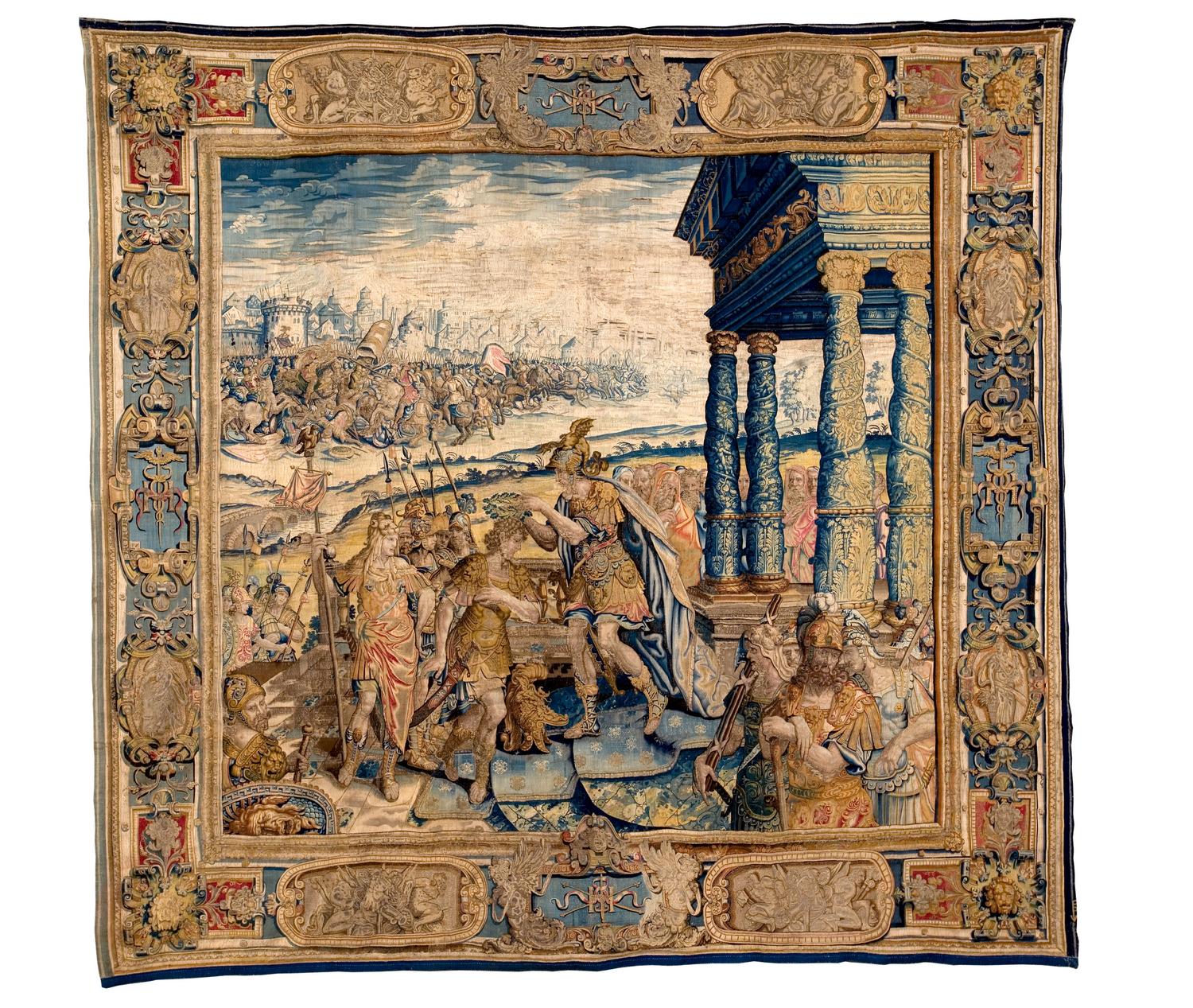
The Coriolanus hanging, woven by the Mobilier National at the request of Henri IV before 1606, offers a fine example of how gold was used to enhance tapestries. Building on this heritage, the project seeks to valorize French tapestry traditions by reintroducing conductive materials. When woven, these materials open new narrative dimensions: the tapestries become tactile interfaces, responsive to touch and proximity, and capable of interacting with spectators.
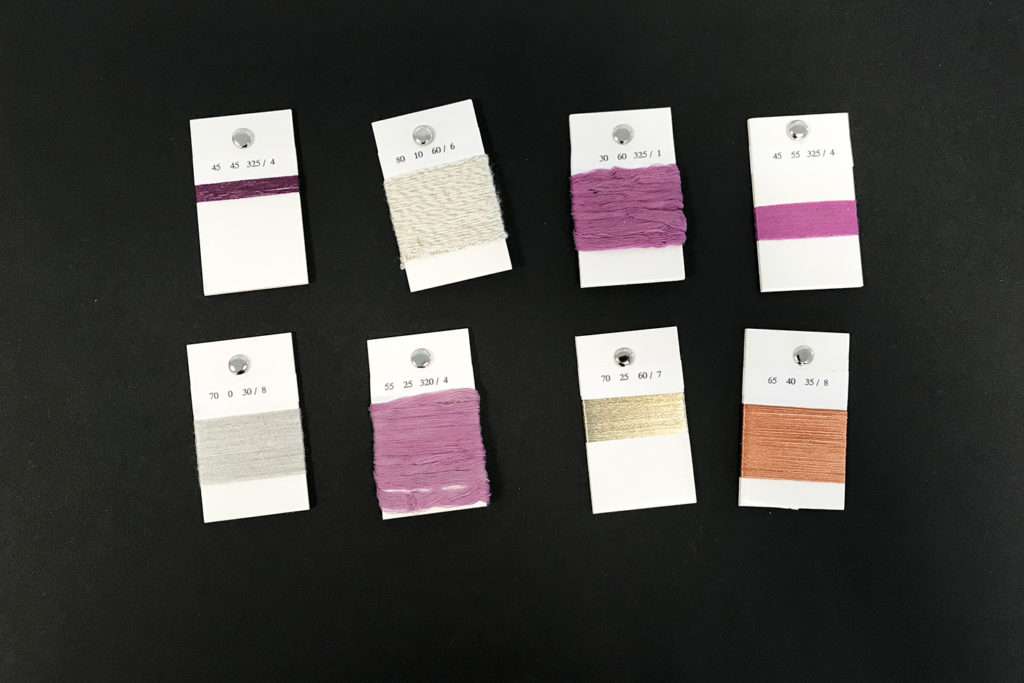
In continuity with the historical use of gold and silver threads, the copper and silver conductive threads enrich the tapestries with their shimmering colors. More discreet, the stainless polyester threads were dyed to merge seamlessly into the decorations while preserving their conductive properties. Each thread establishes a distinct interaction with the surface of the tapestry. The color of each thread was measured at N.I.M.E.S., echoing the registration process within the Mobilier National’s official color chart.
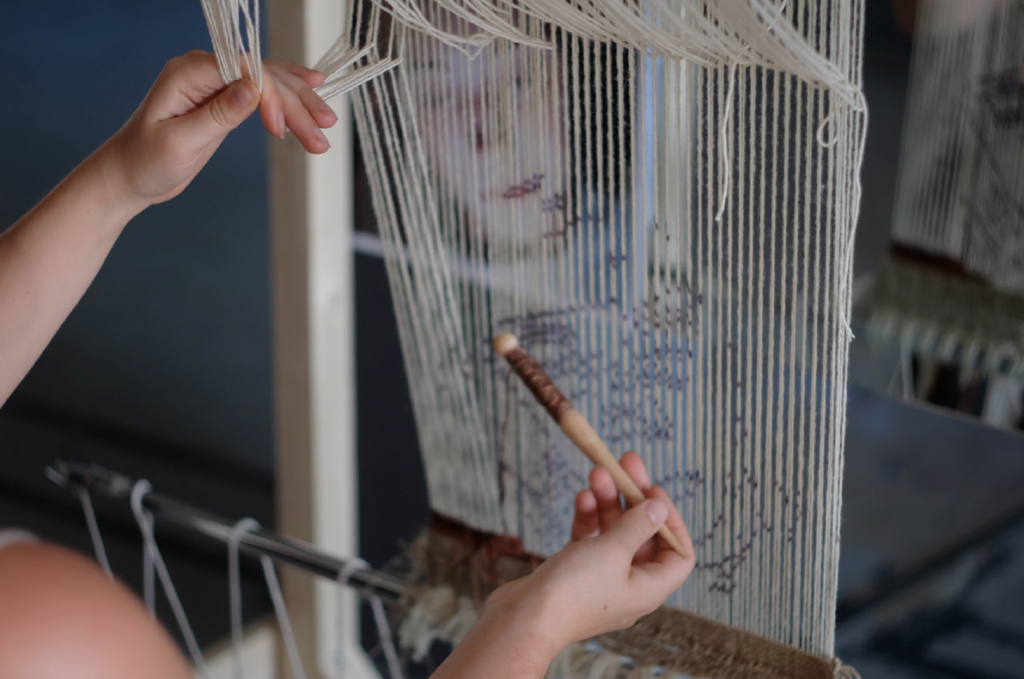
As a research project, Quantified Epopee explores various hypotheses, each articulated through a series of experiments that take shape in both physical prototypes and theoretical reflections, presented in exhibitions and conferences.
Brides
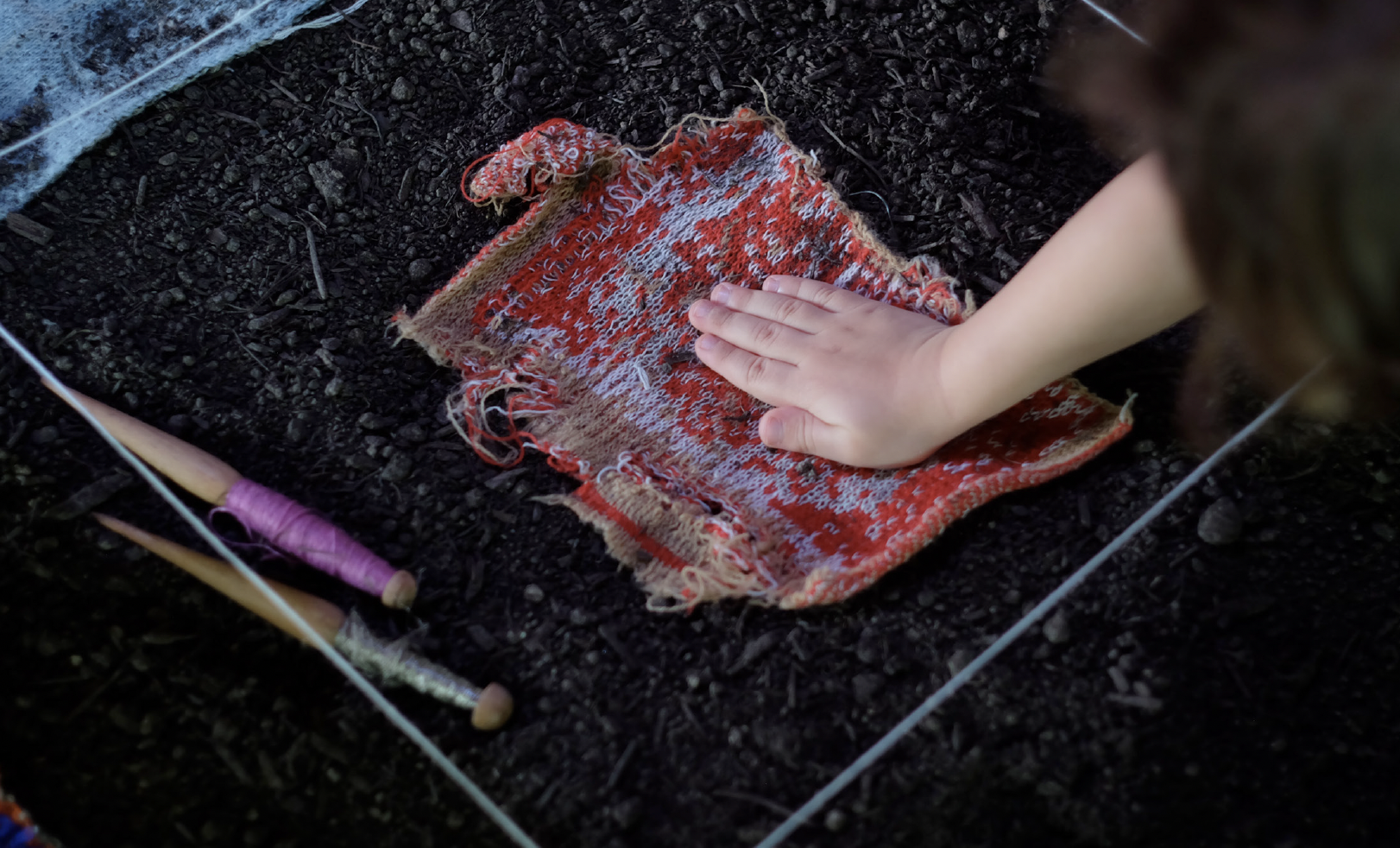
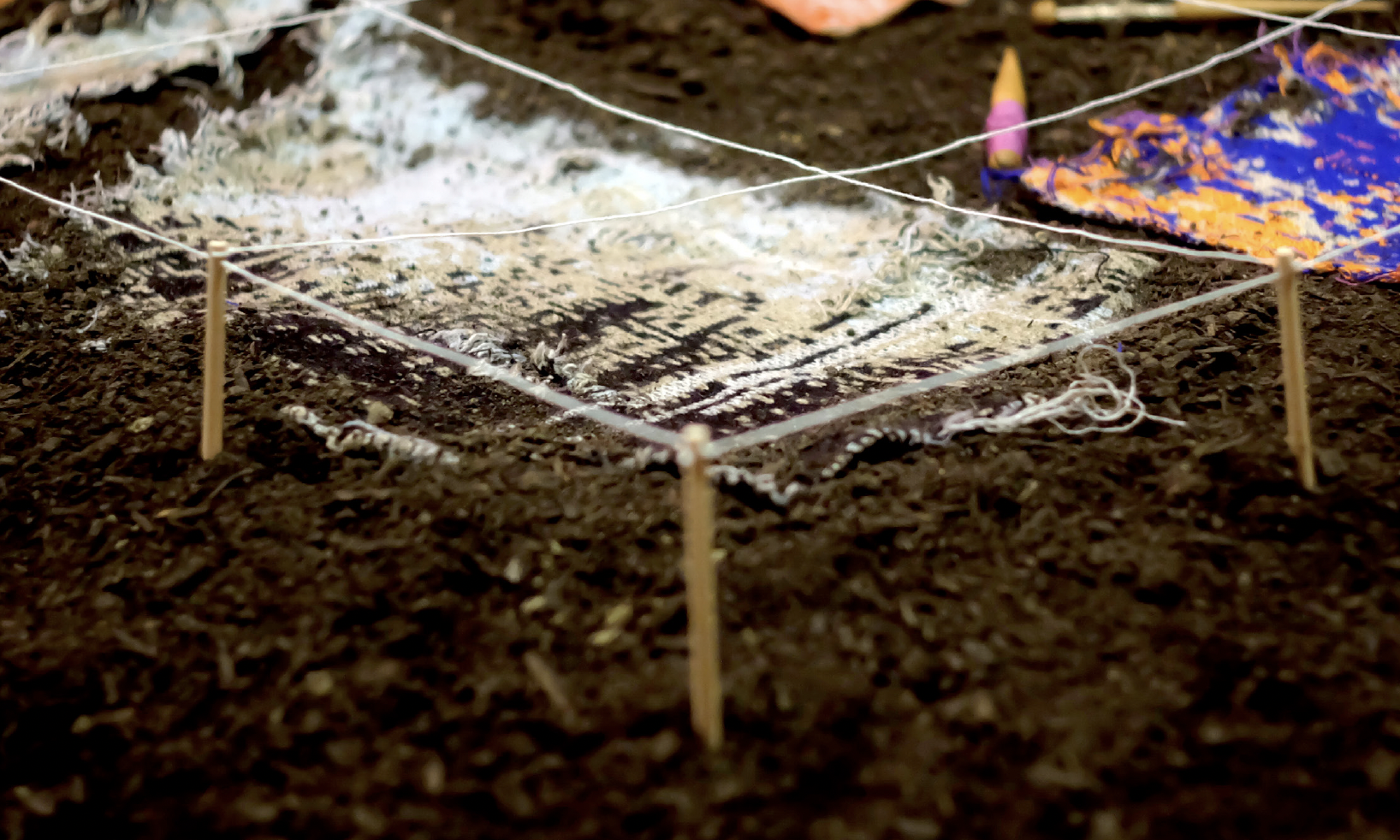
Bribes, the first speculative piece produced in 2016, unveils artifacts from a distant age of digital know-how. Imagined as relics unearthed during an archaeological excavation set in the future, they revive fragments of sound as the hand draws near.
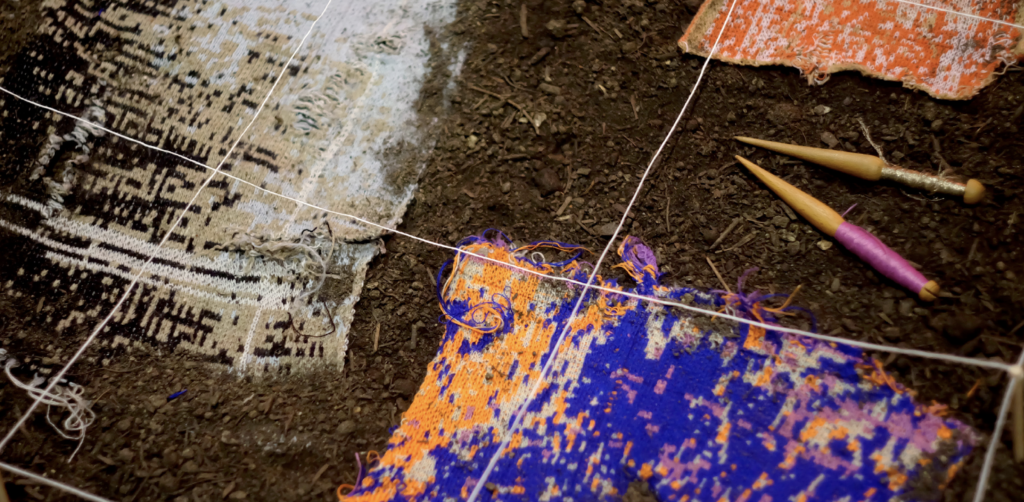
" The sun was high, and the heat more oppressive than usual, yet the conditions—harsh as they were—did not seem to hinder the scientists busily working at the research site. From the very beginning of the excavation campaign, several relics had been unearthed, testifying to the richness and historical significance of this place. This area, attributed to an ancient megalopolis, had most likely once been a gathering point where human activity thrived. For several weeks, each day of excavation had proved fruitful, bringing countless artifacts and strange objects back into the light. But on this 21st of July, 3256, what they discovered was unlike anything before. No sooner had they touched these decayed fragments of textiles than plaintive sounds escaped from the fibers. Indescribable snippets of sound, eroded by time, crackled through each of their auditory devices. These relics, adorned with strange vibrating patterns, bore within them the enigmas of a lost civilization. The fragments seemed to align with one another, forming a larger iconography that perhaps depicted fragments of life and customs from that bygone age. After long minutes of field observation, none of the scientists present was able to unravel the language of this ancestral weave. Awaiting further study, the artifacts were entrusted back to their excavators, who stored them within their thoracic cavities in order to preserve them in a stable environment. "
Un gramme chevaleresque
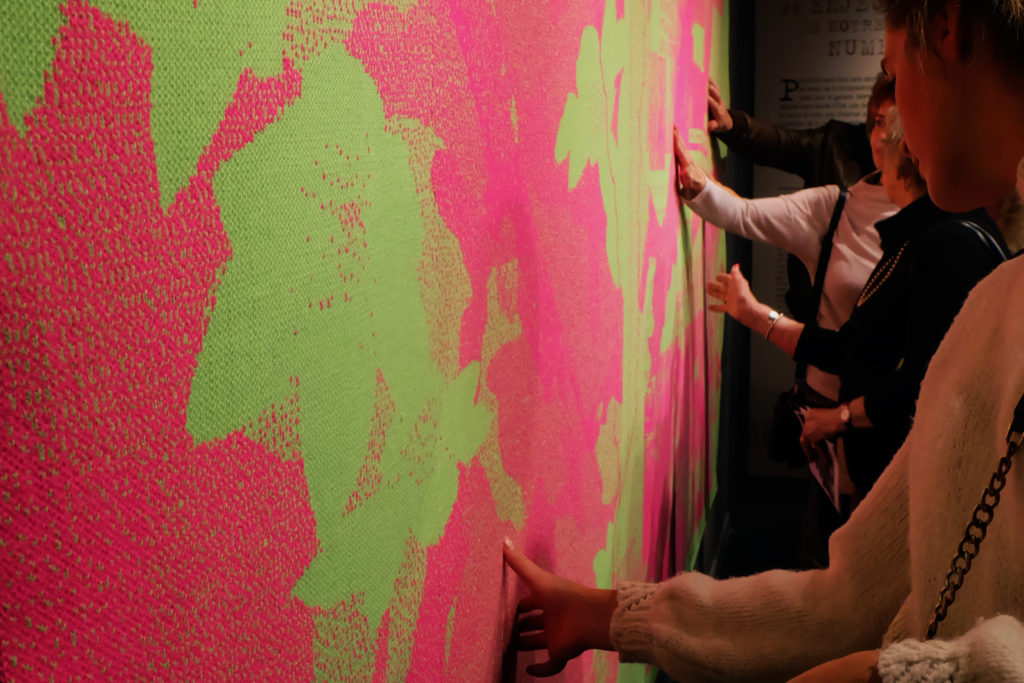
The piece Un Gramme Chevaleresque is a hanging that recounts the digital quest of a contemporary knight — a French soldier on active duty. Produced on a hijacked, computer-controlled knitting machine, the tapestry unveils an iconography drawn from the soldier’s personal social media accounts.
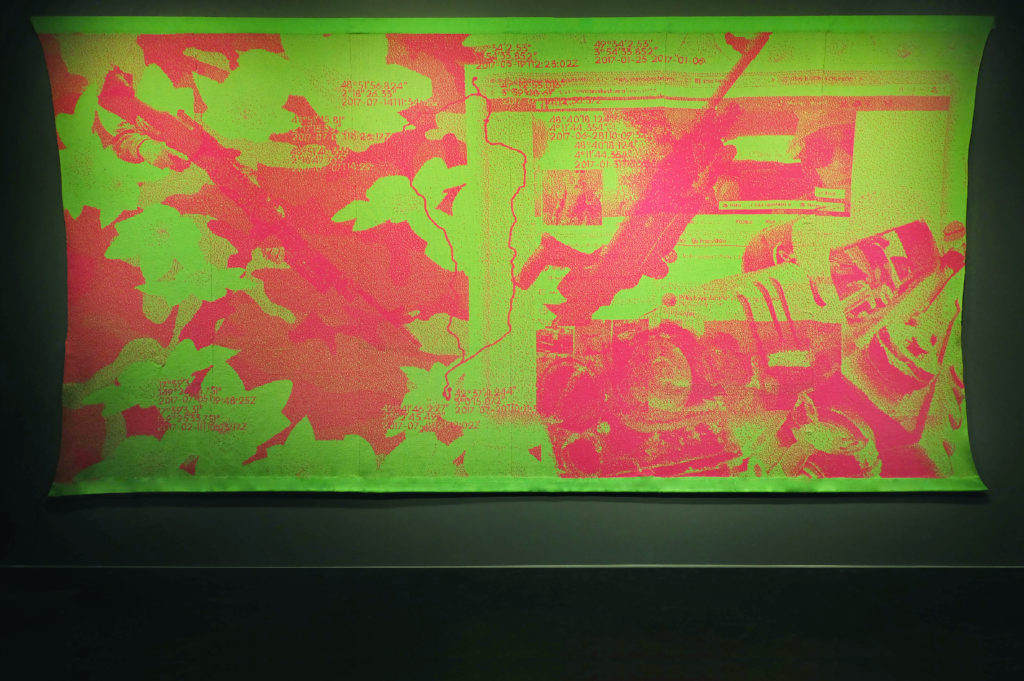
In the background, the floral filters of his Snapchat selfies intertwine with the military fatigues of his daily life. His movements, traced through the geolocation of his Facebook posts, appear as GPS coordinates and mapped tracks. His updates from training grounds, where his regiment carried out exercises, were often accompanied by images of him proudly brandishing heavy weapons.
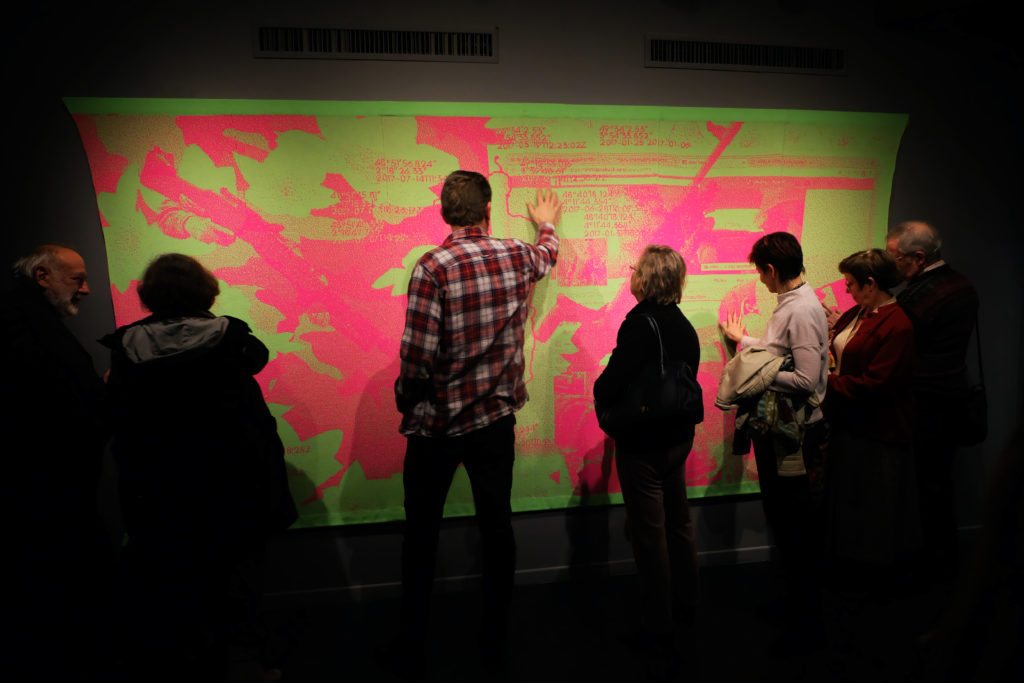
As the hand grazes the surface, it brushes against ornaments made of metal wire. These sensors activate the electronics embedded within the tapestry, broadcasting soundtracks taken from videos the soldier himself posted from the training camps.
Un Gramme Chevaleresque interrogates the impact of digital technologies on identity and citizenship. The Internet and social networks create an intermediary space — suspended between the virtual and the real — in which users pursue their aspirations. The boundary between private and public life becomes increasingly fragile, blurring the very definition of each.
In progress
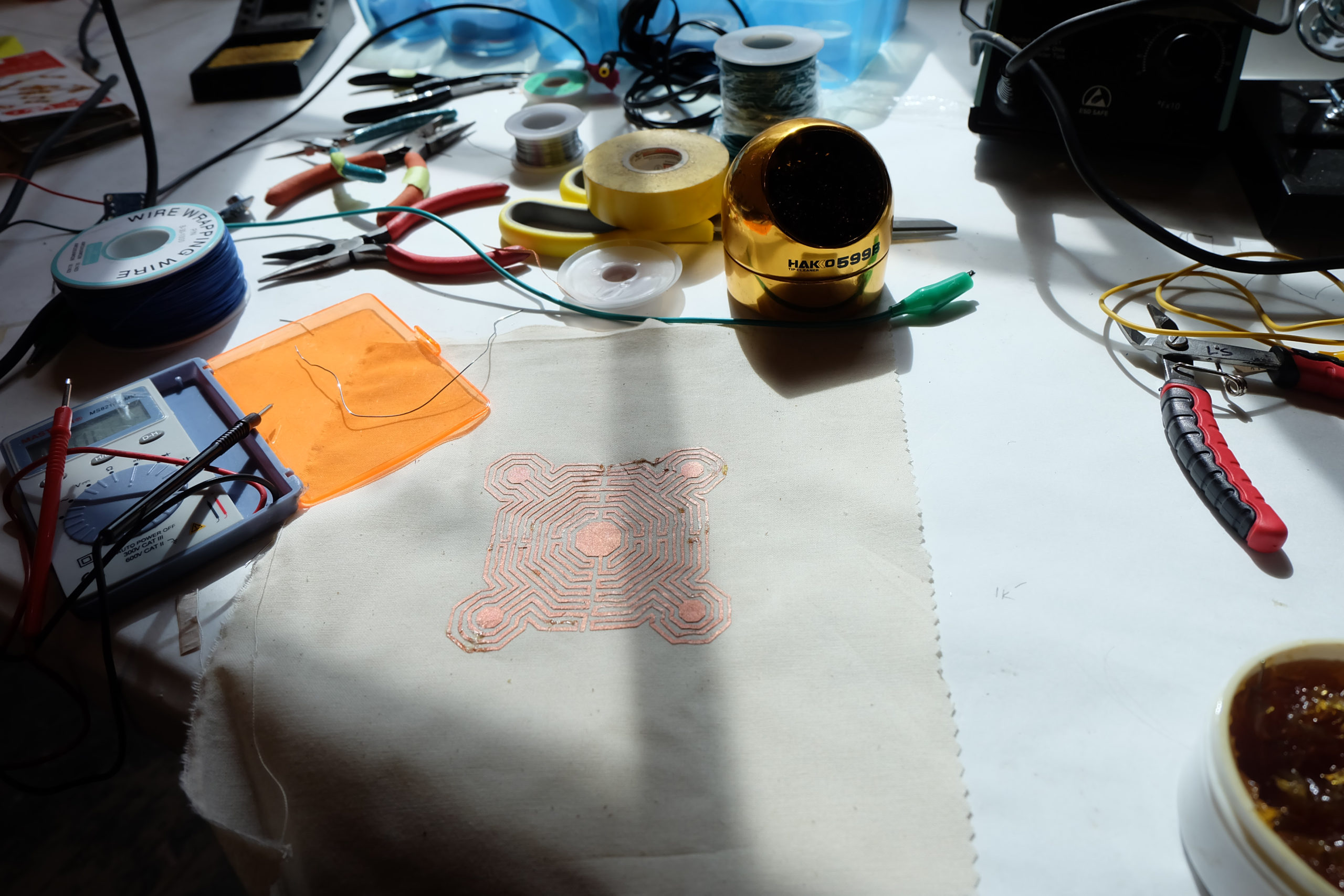
This ongoing project explores different avenues, such as the integration of data into textiles. Here, radio-frequency identification (RFID) is the method used to store, lock, and retrieve data. In the course of pattern research, the labyrinths of the cathedrals of Amiens, Reims, and Chartres were transformed into RFID antennas. The technical component thus becomes a motif — and therefore an aesthetic element of the pieces.
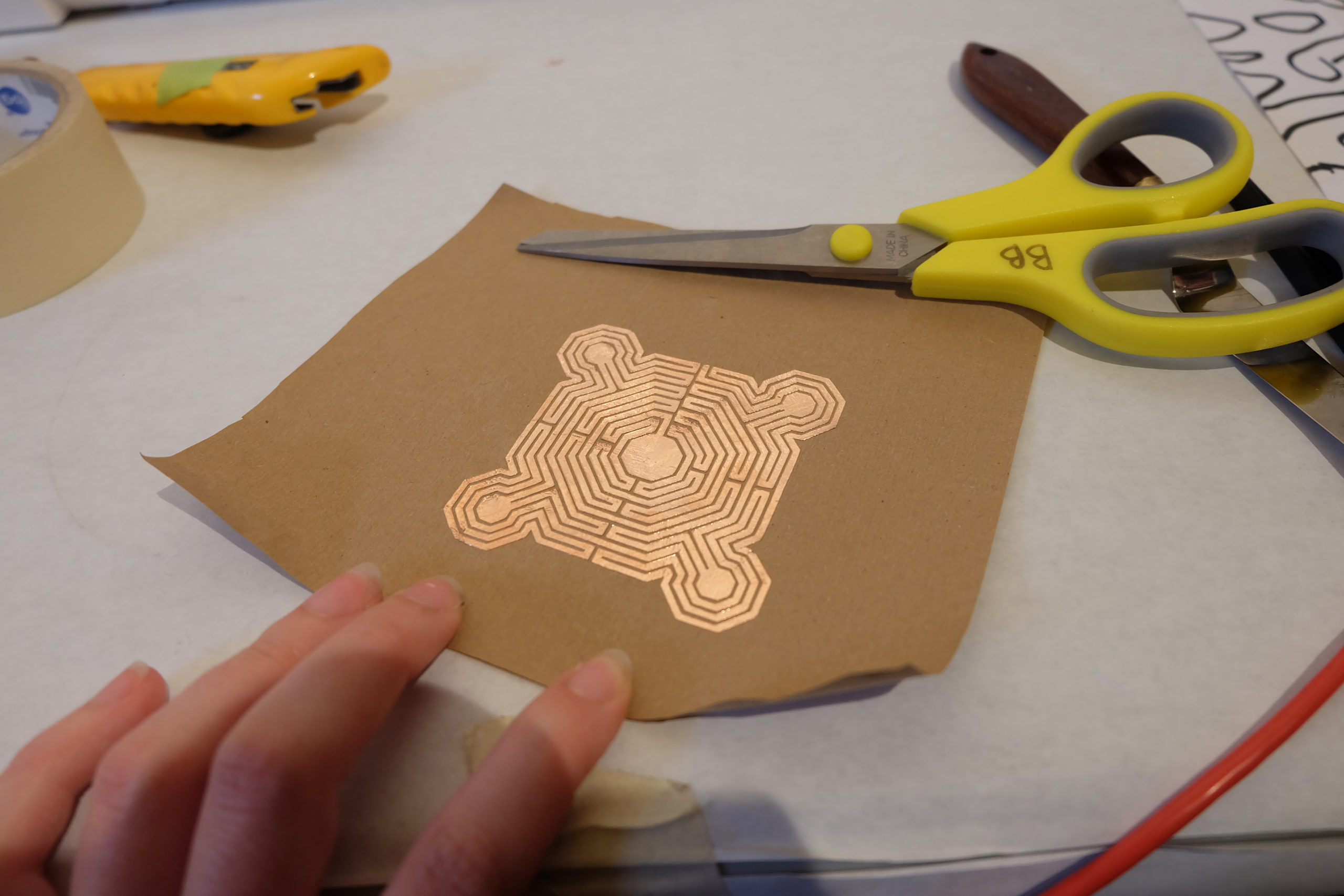
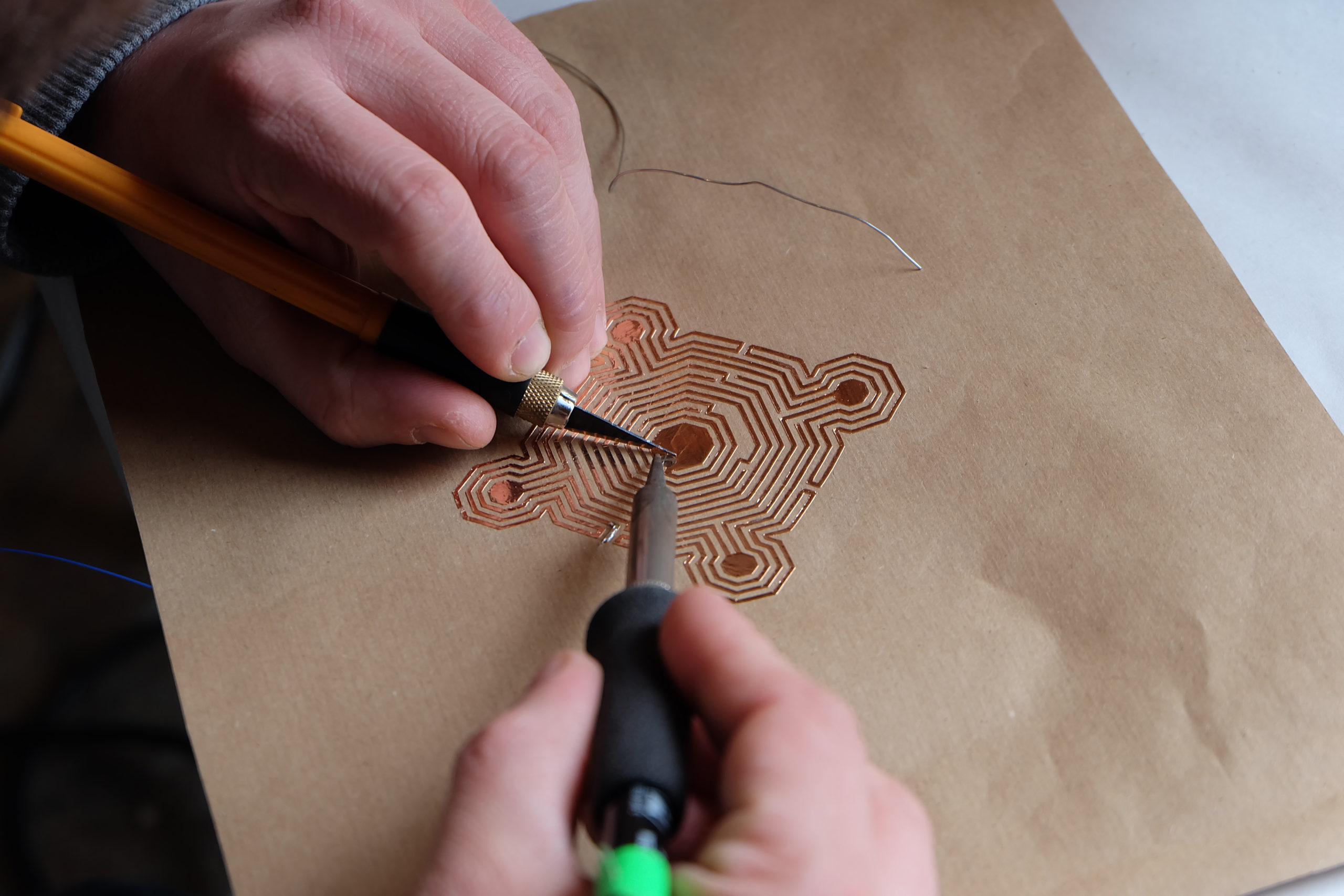
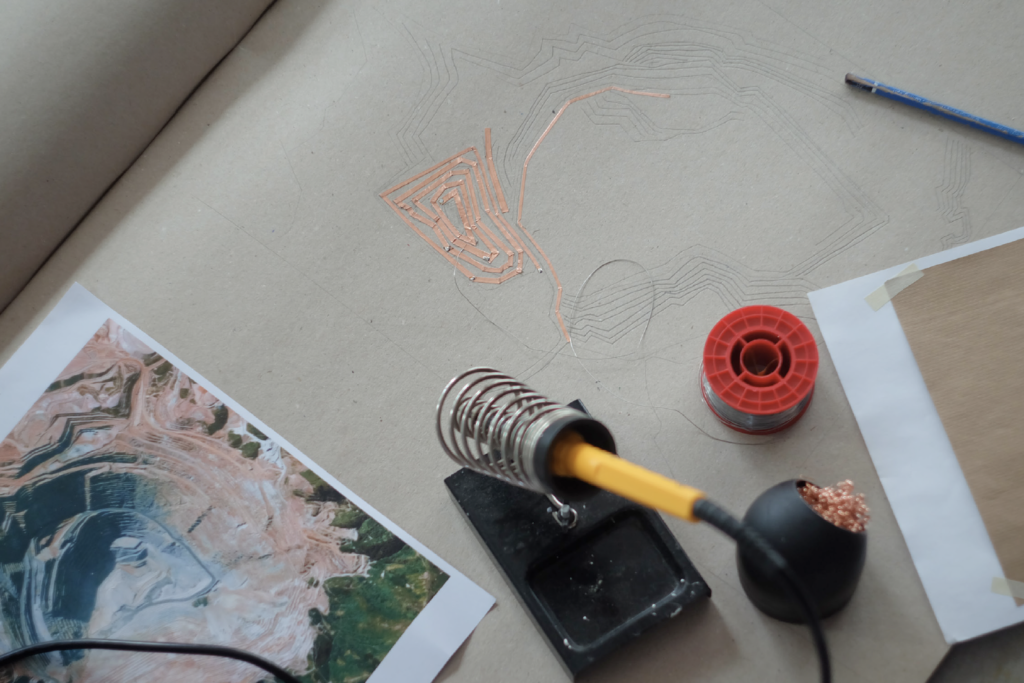
We are currently studying the relationships and parallels between open-pit mines for precious metals and Dante’s Inferno. This cardboard template, intended for weaving the tapestry, tests the integration of an antenna within a visual inspired by the deepest mine in the world: the Bingham Canyon crater in Utah, United States.
This antenna, combined with a chip, makes it possible to communicate data wirelessly in the near field. When approached with an Android phone, the cardboard exchanges information via the antenna and its chip. The prototype antenna is made with adhesive copper foil, while in the final tapestry it will be woven in copper thread.
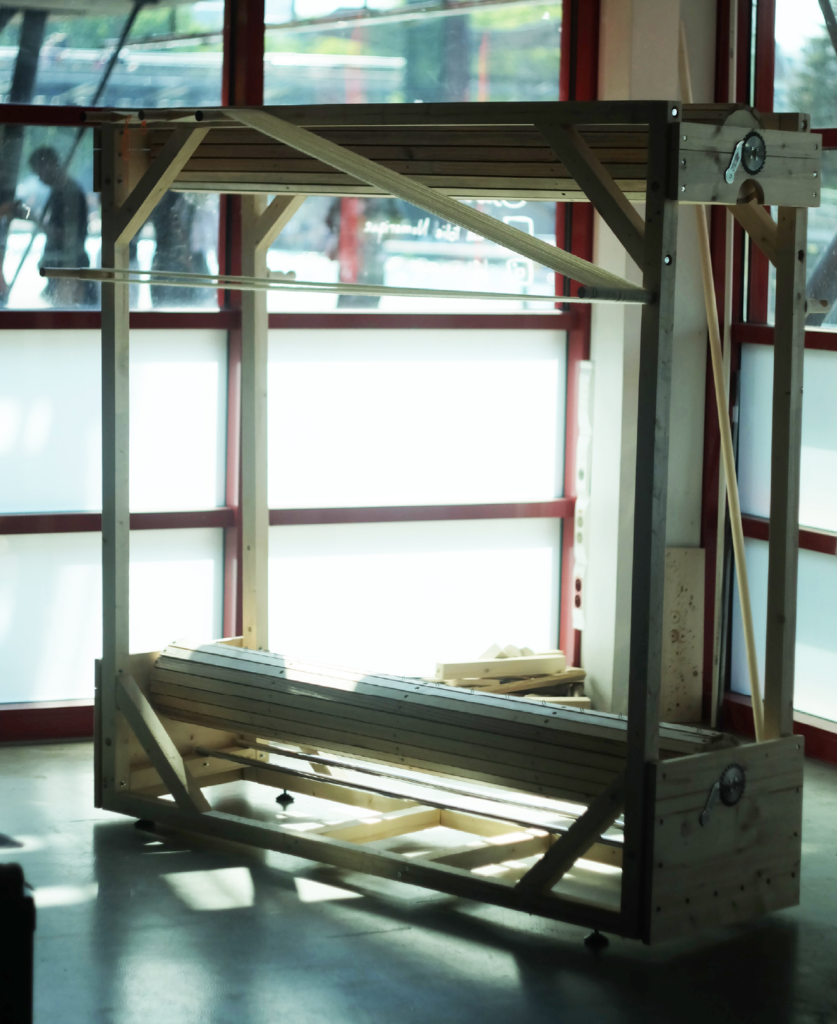
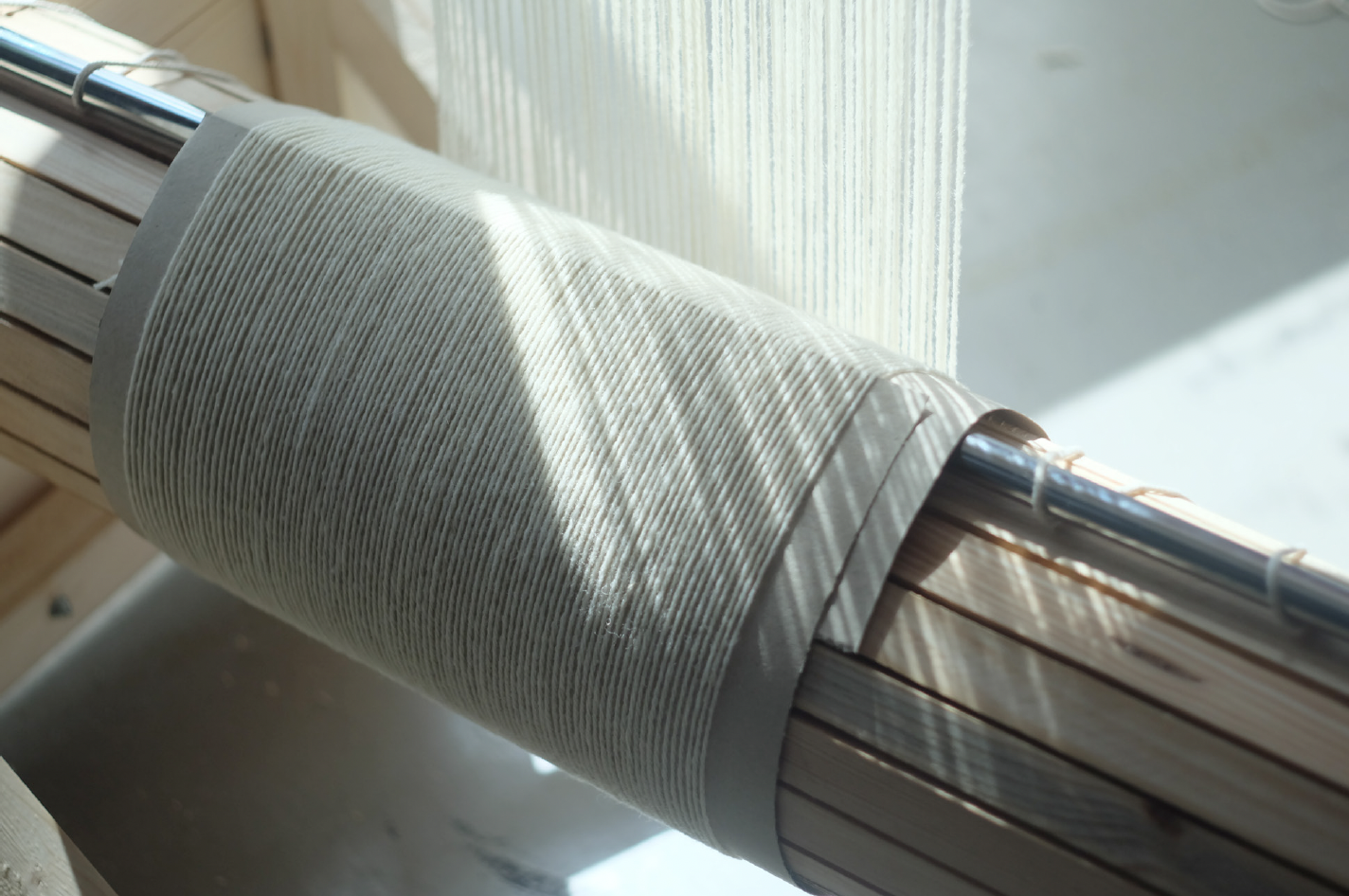
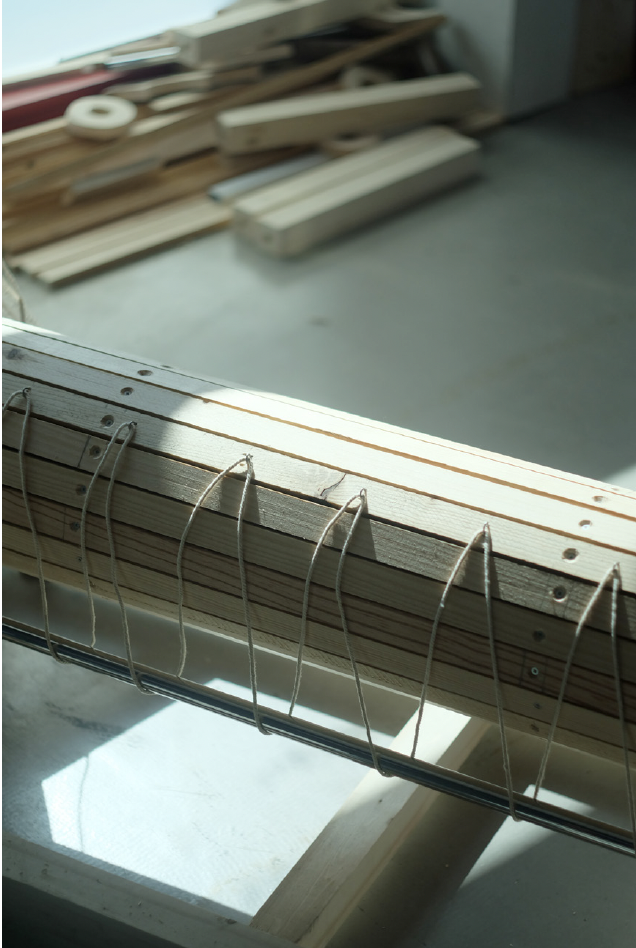
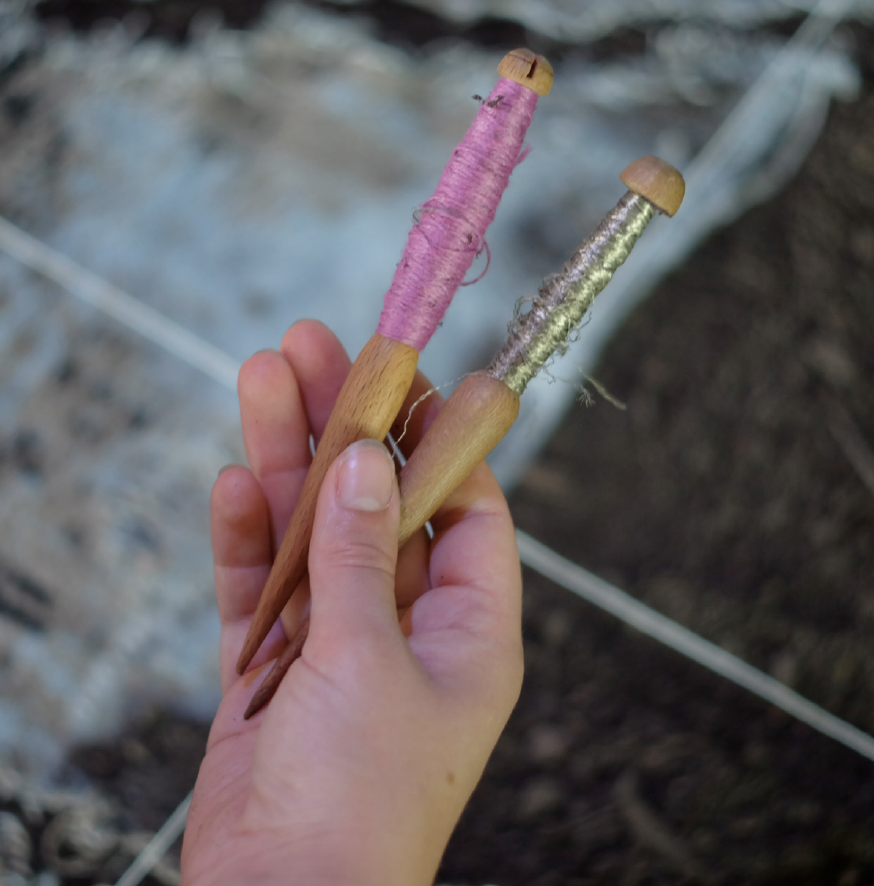
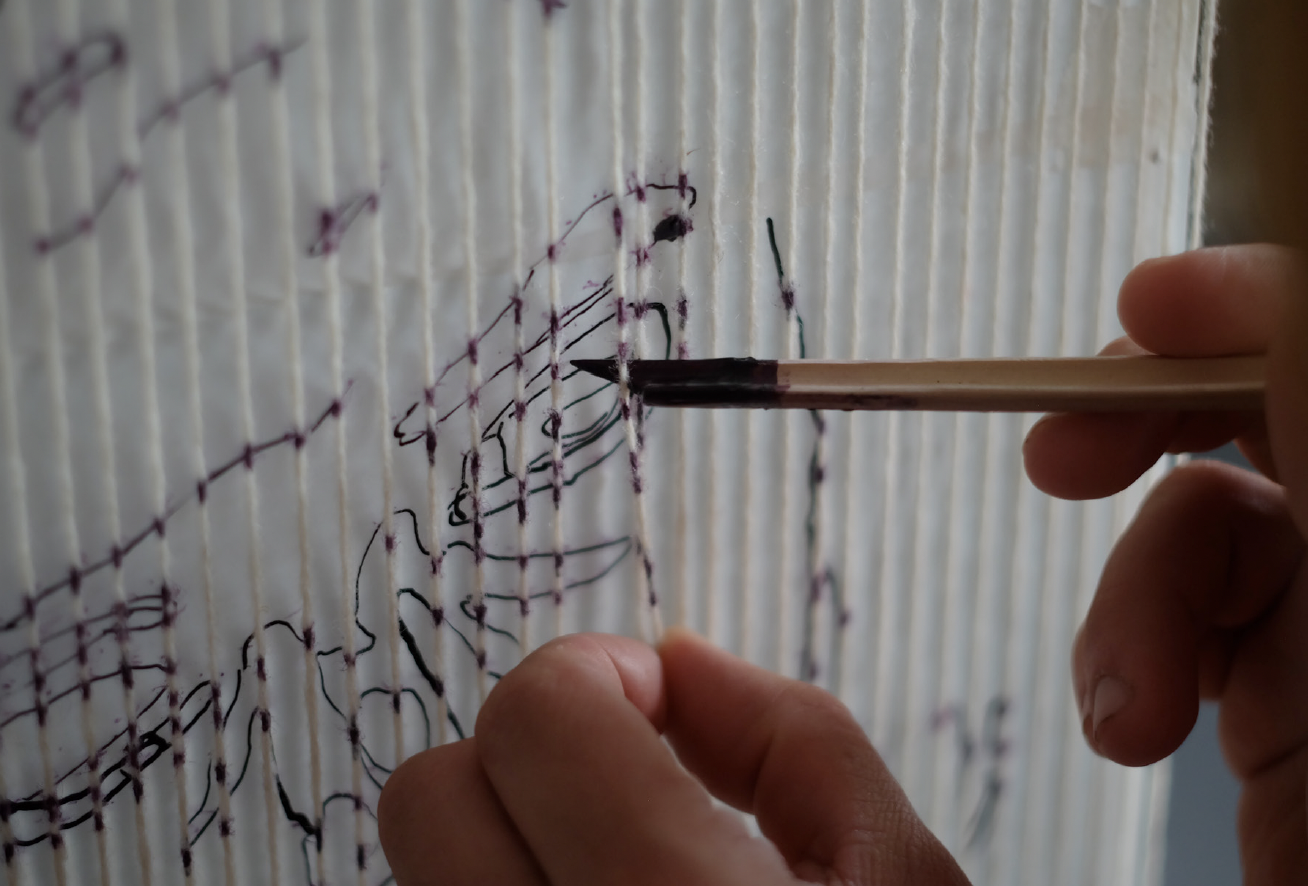
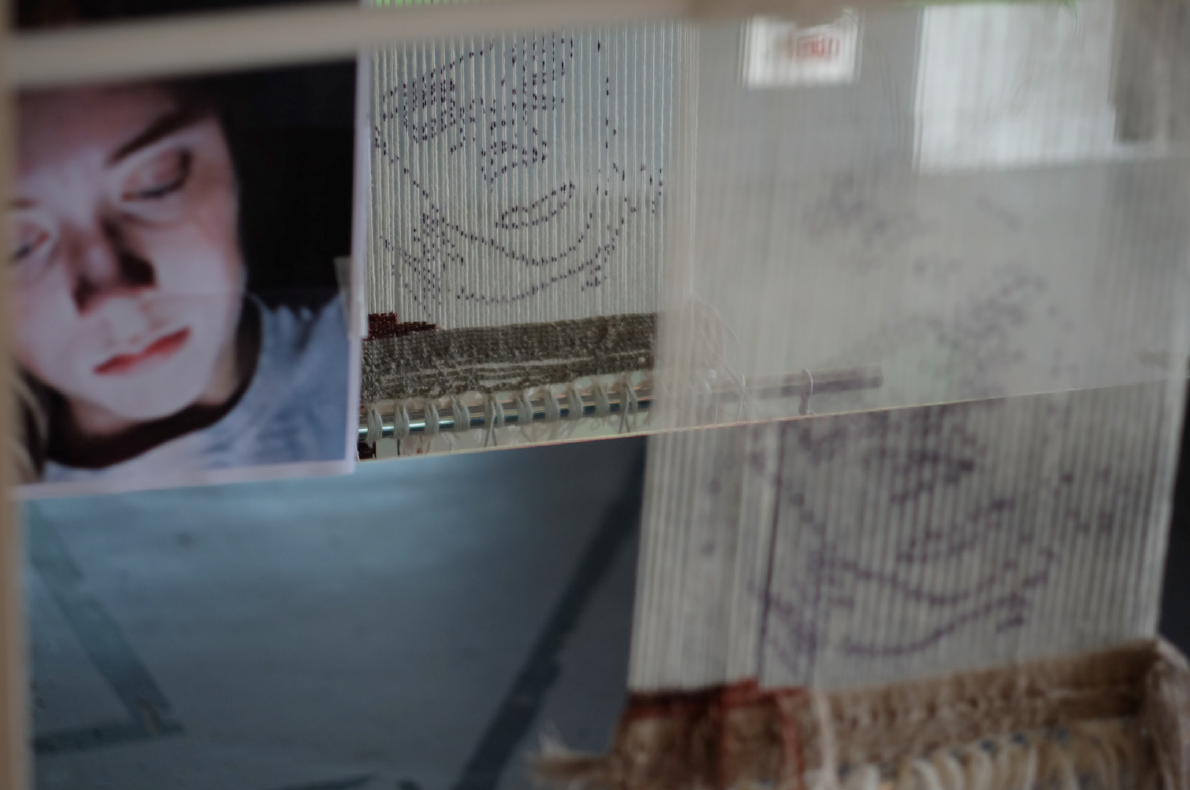
We studied the construction of numerous high-warp and low-warp looms before designing and building our own ideal loom. This process enabled us to observe, analyze, and master every detail of our tool.
Exhibitions
- Les Fééries Nocturnes, digital arts biennale, August 1–31, 2019, Hameau de Champ Rond, Crévoux (05).
- La Folie Numérique, June 12–30, 2019, Folie N5, Parc de la Villette, Paris (75).
- Futur.e.s Festivals, June 13–14, 2019, Galerie des Gobelins, Mobilier National, Paris (75).
- Collection(s), April 10–28, 2018, Ateliers de Paris, Paris (75).
- L’art du secret, November 20, 2017 – January 7, 2018, Mundaneum, Mons, Belgium.
- Tribe Against Machine, September 2–15, 2017, Red Room, Taipei, Taiwan.
- eTextiles Cuvée — Softopia, July 22–30, 2016, Centre d’arts contemporain des Moulins de Paillard.
RESIDENCIES
- La Folie Numérique, June 12–30, 2019, Folie N5, Parc de la Villette, Paris (75).
- eTextile Spring Break, April 1–7, 2018, Wassaic Project, New York, United States.
- Le Pavillon d’Angiviller, October 2017 – June 2018, Mobilier National, Paris (75).
GRANT FOR CREATION
- Awarded the creation grant of La Folie Numérique (2019).
- Awarded the creation grant of Transcultures (2017).